
This essay is rooted in my lived experience as a woman, a mother, and a traveler who writes about autonomy, belonging, and everyday decision-making. While food is the surface subject, the essay examines broader themes of consent, power, and how early conditioning around “small” choices can echo into adulthood.
I am not writing as a food critic or cultural historian, but as someone reflecting on how ordinary moments—what we hear, what we tolerate, what we say yes to—shape our sense of agency, and how those choices are modeled for children. The experiences described are personal and directly lived.
I ate sushi in Japan and alligator in New Orleans. And it was my choice.
The young girl’s mouth quivered and her eyes glistened. She hated cheese—the smell on her fingers and the texture on her teeth—but her father made her eat it anyway. Sandwiches, scrambled eggs, nothing was off limits. Sometimes she slipped it off her baloney sandwich and passed it under the table to her brother. Other times, she simply ran to the bathroom and spat it into the toilet. It didn’t matter how many times she said she hated it, the outcome was the same every time.
She began dreading weekends—her stomach clenching whenever she heard her father say, “Who’s ready to eat?”—and she wished instead for the free school lunches. School lunches with steamed cheeseburgers. At least she could easily remove that cheese and didn’t have to worry about who was watching her. But at home, when she could no longer avoid cheese, she would take small bites of her sandwich, smoosh it into balls that she could then push to the back of her throat to swallow without tasting it. Throwing it out was wasteful; spitting it out was ungrateful. Her protests dismissed. She was a child after all and didn’t know what was best for her. She finally stopped protesting and she simply ate it. The tone of his voice was all she needed to hear to know anything else was unacceptable.
That girl was me.
But also, she isn’t just me. It’s the woman who is told to change her clothes or the one who foregoes her dream of traveling the world. It’s the woman who said yes when she meant no, all because someone didn’t agree with her choice. Because she and I learned early that our voices were silenced if we tried to protest.
Cheese-free decades later, I was now free to say yes—to what I ate. But that didn’t mean it came without cost. Whenever my friends suggested Italian, I knew what I was having for dinner. A plate of spaghetti that I could make at home for $5. Sometimes, I would push back and suggest Thai or American. They’d say to me, Didn’t we just have that last weekend?Other times, I could see the disappointment on their faces because they wanted me to enjoy my meal too, but it often came at their expense. Like with pizza. Who orders no cheese on their pizza without apologizing to everyone else at the table? I would have if I thought a mass mutiny wouldn’t have occurred.
And then there were the times the kids asked me to make them grilled cheese. I wanted to say, No, I won’t make it for you, but instead I pinched my nose and held my breath as I unwrapped the stinky package.
Japan, December 2023. I was on a private food tour. Stops for tempura: kisu, salmon, lotus root, squid, eggplant, and then okonomiyaki, Japanese fried pancakes. I said yes to it all. But then my guide announced our next stop: a local sushi restaurant. I got quiet. I was afraid if he heard me speak, he would hear the voice of a child protesting a food that she knew she didn’t like. As we walked, I was taken back to a time when I couldn’t make my own decisions about what I ate. I could hear myself defending my choice: I don’t like the way the meat tastes on my tongue or the way the fish gets stuck on my teeth when I take a bite. The smell hitting my nostrils long before my taste buds. I thought of all the strategies I had used as a child when I had to eat cheese. Would they work here?
But then I started to wonder, Why do I need to use those strategies? Why can’t I just say, “I don’t like sushi.”
I was paralyzed with fear.
We sat at a table in the crowded restaurant. The backs of our chairs scraping against each other, elbows of people at the bar pulled in close to their bodies so just one more person could sit. My guide took the menu and asked, “Do you like sushi?”
I wanted to say no but instead I nodded. My head not matching what was happening inside my body. My stomach clenching and my mouth suddenly dry, wondering what I had gotten myself into. I wasn’t a foodie. I hadn’t reinvented myself. I was the same child afraid to say no to cheese.
But as I watched his eyes light up as he described the importance of fish to the Japanese, I heard the pride in his voice. I looked around the restaurant and saw plates piled high with salmon, yellowtail, tuna, and mackerel and smelled the wasabi, reminiscent of beef sandwiches from home. Suddenly, my stomach grumbled and my mouth salivated. I was no longer afraid to say yes.
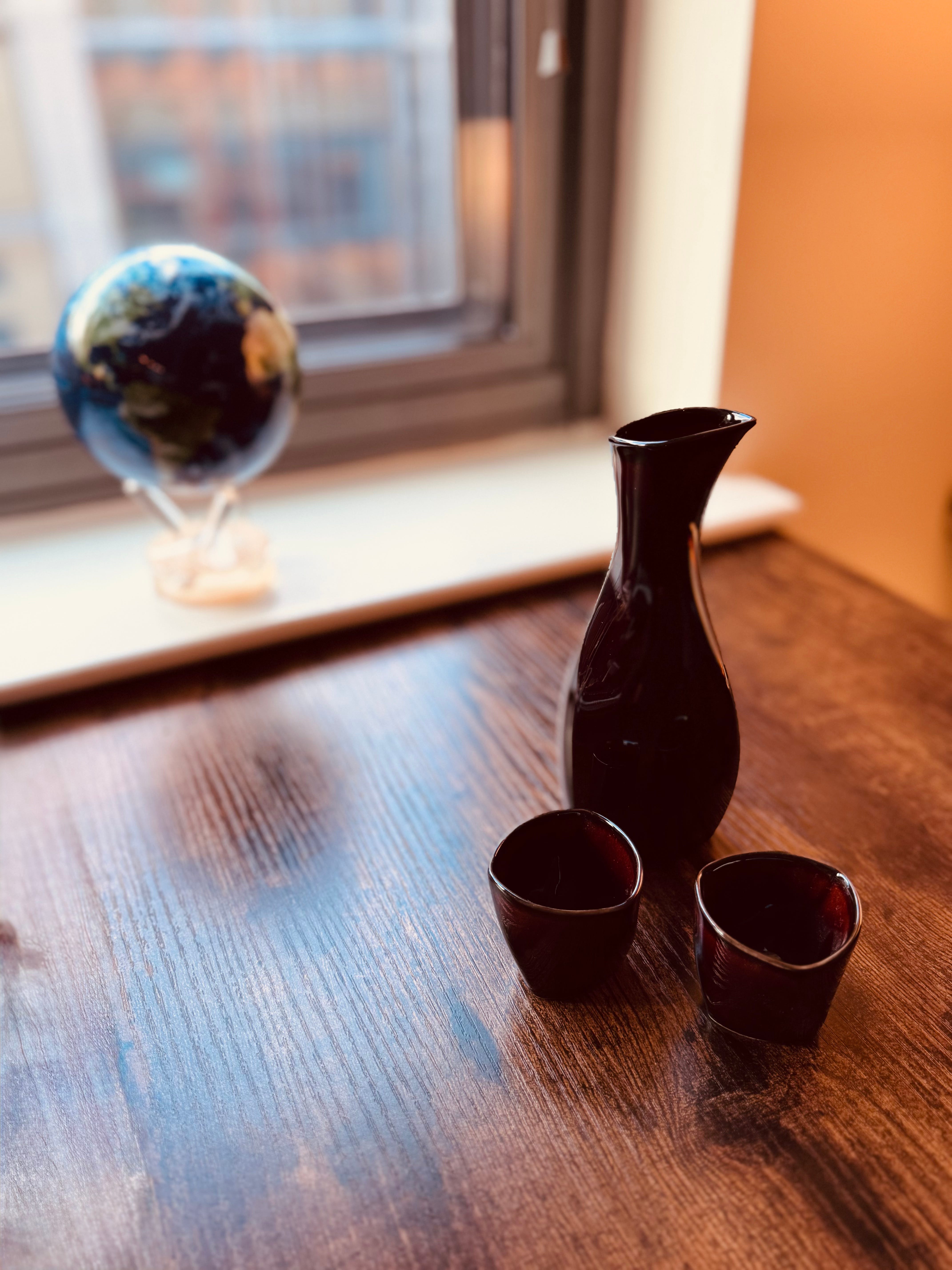
When the sushi arrived, I chose a piece and took a bite, allowing it to first sit on my tongue and then dissolve away. As our server came to fill our sake, he filled each cup to the top, overflowing into a red-and-black lacquered box that caught it. I took a sip. And another. With each sip, it became easier to take the next bite, and the next. At the end of the meal, I was eating sushi.
Two years later, I was sitting in a restaurant in New Orleans with my son, my daughter, and a long-time friend. Creole sounds and Cajun scents filled the air. We looked at the menu, full of New Orleans staples—fried catfish, jambalaya, blackened chicken—foods and tastes that were familiar to me. But then I saw it. Alligator. The menu read: “slow-simmered alligator tails in a dark, aromatic roux with onions, peppers, and celery.”
I’d never tasted alligator before, and my mouth watered at the description. Confidently, I told the kids, “I’m going to have alligator.”
They nodded their heads in acquiescence. “Sounds good,” they said.
“Or maybe the catfish. What do you think?” I asked them.
They replied, “Both sound good.”
When the waitress arrived, I ordered alligator. It was a proclamation.
Later that night, I wondered how many other times I had said yes when I meant no. Working late. Driving when I was exhausted. Having sex when I didn’t feel good. What had I been teaching my kids about saying yes because you have to, and not because you want to? That night, the shift—from I have to to I want to—was mine. And my kids witnessed it.
After the meal, they asked me, “Was it good?”
I nodded and with a satisfied smile on my face said, “Delicious.”