
I’ve spent the last few years trying to understand what belonging actually feels like. A Super Bowl halftime show made me think about it differently.
As a teenager, I didn’t fit in among my classmates. After graduation, I moved around searching for home. Once I had a family, I thought I would see my face in the pictures that sat on their mantels. But I still didn’t.
Belonging isn’t only personal. Groups form around shared identities as well—sport teams, unions, protests. We join them so we don’t have to be on the outside and alone. When we are not part of them, it can feel like exclusion.
Some Americans felt this way during this year’s Super Bowl halftime show. Bad Bunny, a Puerto Rican artist, performed a thirteen-minute set. It was delivered in Spanish and subtitles did not appear on household televisions.
When the NFL announced Bad Bunny as the performer, the reaction was immediate. People said, we don’t speak Spanish. This is an English-speaking country. Before the show, social media feeds were filled with calls for an English-speaking performer. An alternative concert featuring Kid Rock was aired on YouTube. The show was in English.
For some viewers, in that moment, it felt like not belonging.
I recognized the feeling immediately—but from the opposite direction.
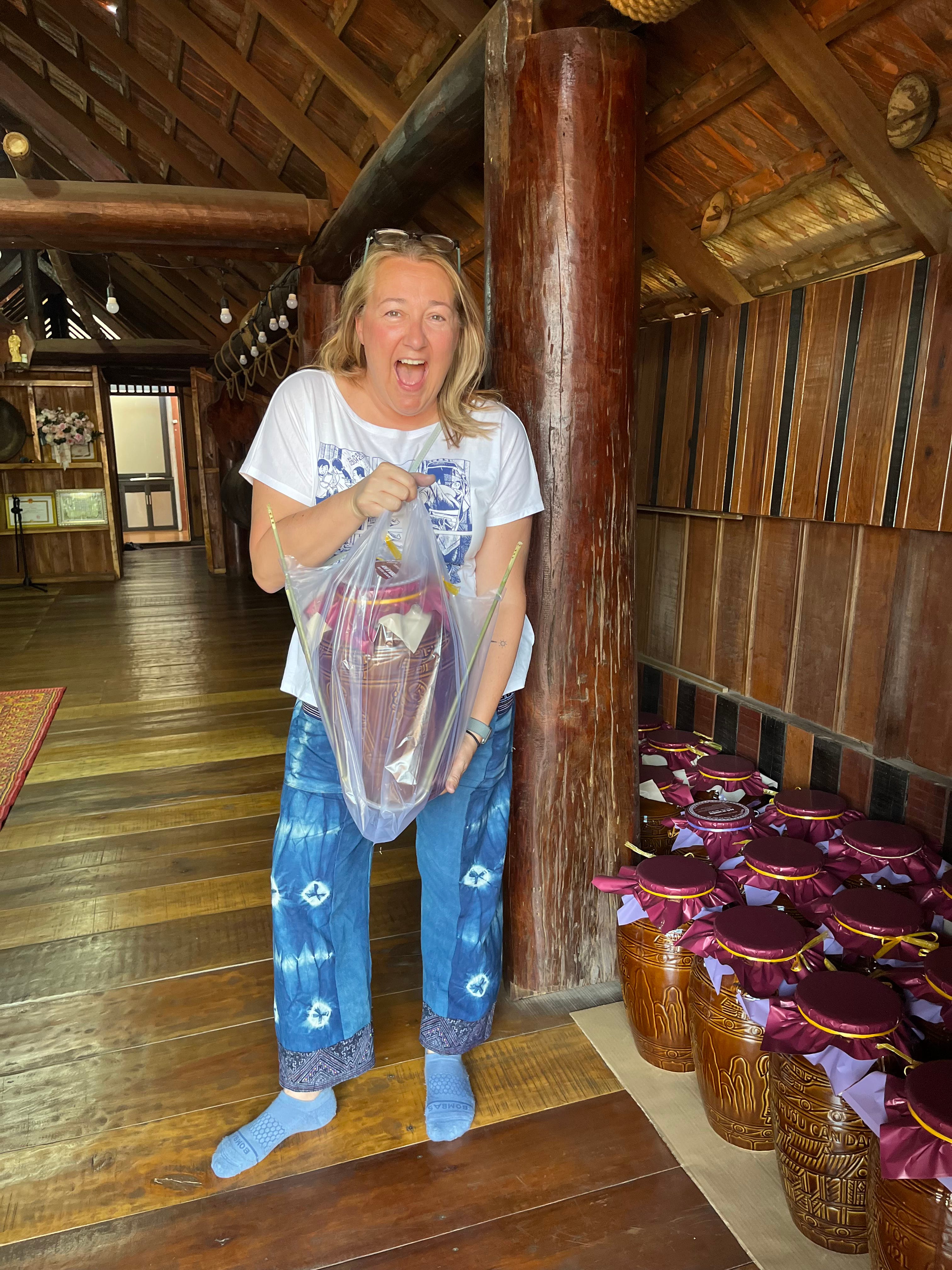
I traveled the last four years searching for belonging. I was among people who looked nothing like me, who spoke a language that I didn’t understand, and in histories that I knew nothing of. I found belonging with a young woman who shared her table and family with me during one of her country’s most important holidays, Tet, the Vietnamese Lunar New Year. I didn’t understand the jokes that made her family laugh, and I couldn’t ask for more food or drink. Yet I knew I belonged at her table. I felt it in the offers of more food and the kind hands placed on my arm. Belonging came from a feeling. It did not come from a shared language.
Travel began to show me something I hadn’t understood before. Belonging isn’t always created by sameness. Sometimes it comes from the small signals that tell us we are welcome.
Our sense of belonging is challenged when we don’t see ourselves in the stories that are told or the acts that are performed. When we can’t understand the language being spoken, uncertainty rises. We begin to wonder if we belong.
Not being able to understand the lyrics was equated with exclusion from the show. But exclusion is more than not understanding the lyrics to a musical performance. It’s restricting people from meaningfully participating in society. It is a loss of rights and access. The setting up of barriers to tell people they don’t belong. But exclusion is not the same as not seeing yourself in those around you.
Our country is a pluralistic country, one made of people from all corners of the world. When people immigrated here, they brought with them new foods, cultural traditions, and languages. We love the diversity of foods, but we don’t love the diversity of languages. We frequent Mexican and Chinese restaurants but rarely question if we belong in them. But when we hear unfamiliar languages on the subway or in a restaurant, we question if the people speaking them belong.
We’re taught that belonging comes as a result of sameness. When we gather in the family room and reminisce, we can feel the connections building. A shared language allows us to navigate that experience without thinking about it. Even if we weren’t there originally, we can use language to understand the story. But when the language isn’t known, we don’t hear ourselves reflected back. We find it difficult to identify with and to feel the story. That can make us feel excluded, even when we have a seat at the table. With the Bad Bunny performance, the unfamiliar language left some viewers feeling excluded.
But belonging does not mean seeing yourself in every moment. Instead, it means still having a place when you don’t.