
My brother died in November. While I had talked to him more recently over the last year, I hadn’t seen him more than a few times in the last twenty years. We weren’t close and I thought maybe I didn’t even know him. When I found out he died, I didn’t cry. I just went back to sleep. The next morning I messaged my boss. He responded that I should take as much time as I needed. I took the time, but I wasn’t sure if I needed it.
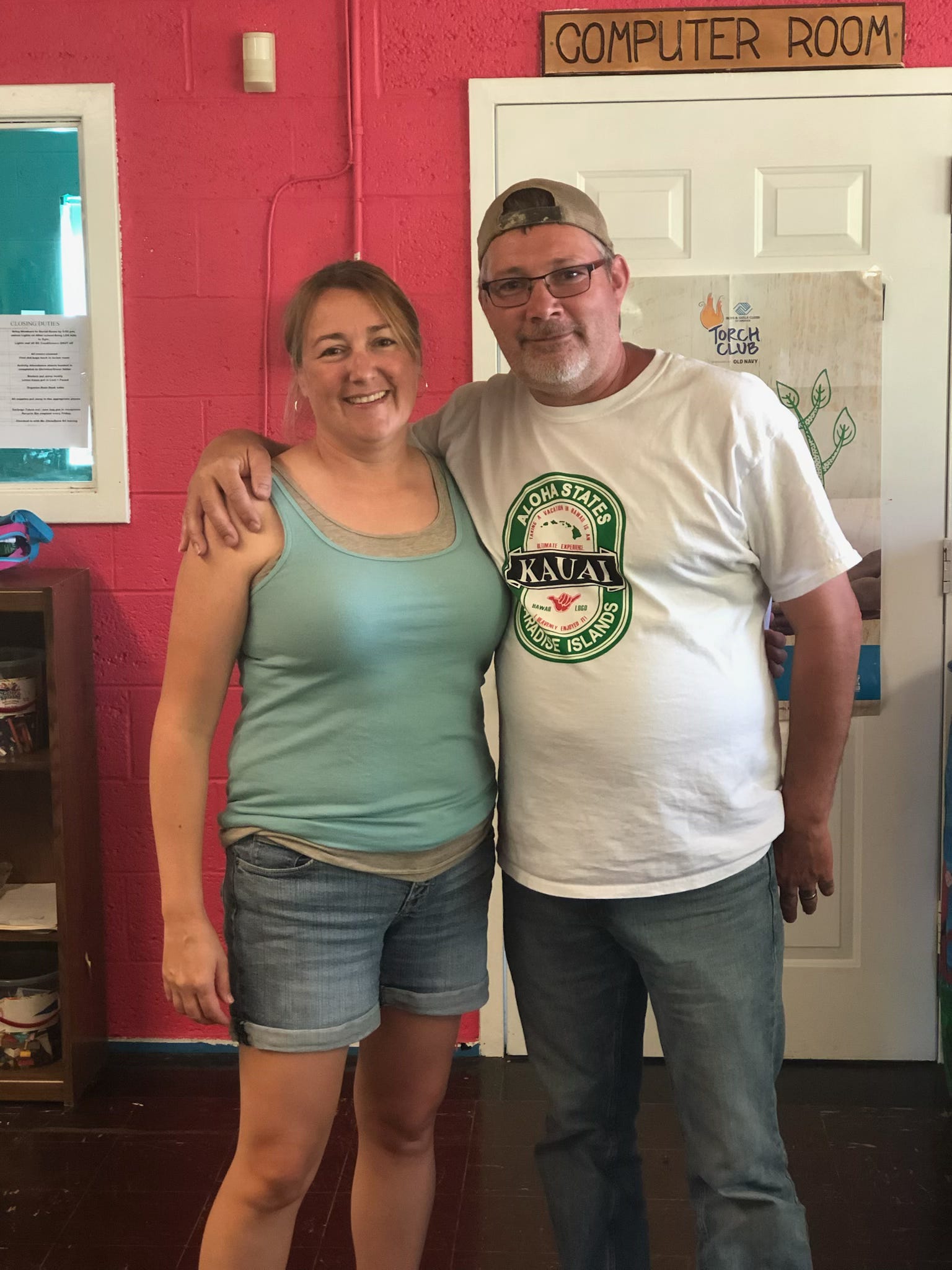
Rob and I, June 22, 2019, my mom’s 70th birthday — the first time I saw him in ten years.
I kept looking for evidence that my life had changed with his passing. I thought that maybe my phone would blow up with family group messages or we would rush to be with each other. I thought we would all be on the next flight out. But none of that happened. Instead, I still answered emails and took meetings. I prepared for a long trip out of the country. I read and I slept. My life went on and I couldn’t understand why.
I had always measured the strength of relationships on a spectrum of emotional intensity—hatred to love. But if the emotional intensity isn’t there, how would I know that I loved someone?
With every relationship I’ve been in, I started with hope. I felt hope that it would feel different than the one before it and the one before that. Hope that this one would hurt if I lost them. And each time, I looked inward for something that told me I had changed—that I was willing to give up something important for my partner. A trip, being right in an argument, saying yes when I really meant no. And each time when I realized that the relationship wasn’t any different than the one that came before it, I didn’t just feel empty. I felt like I was pretending.
After my brother’s passing, I was expecting to feel the type of loss that people would notice when they were around me. The one that has me breaking down in the airport, unable to control my sobs as I begged the desk agent to get me a seat on the next flight. The kind I expected to feel when my relationships ended. Walking around with red, swollen eyes or withdrawing from activities I once enjoyed. The kind of loss that is on display which allows observers to understand what they are seeing. They know how to support us—calling and texting, reminiscing and sharing stories and memories. But none of that came. Not after the relationships ended. Not after my brother’s passing.
What happens when loss doesn’t show itself? Our daily routines continue without interruption as if nothing happened. The intense emotions we expect to feel and that others expect to see are instead flat. We mischaracterize that flatness as not loving. In that flatness, time passes and loss is forgotten.
When I returned from my trip the month after my brother passed, I picked up right where I left off. At the office, nobody asked me how I was doing. I went back to answering emails and attending meetings. Too much time had passed since my boss first heard the news that nobody sent flowers. At home, the kids and I planned for the upcoming holiday. The dog went to the vet. I continued to prepare for the launch of my book. The family thread dwindled from eight to four people. And I slept fine.
After my brother died and I still hadn’t cried, the question of how I knew that I loved someone surfaced for me again. And now, with Valentine’s Day on the horizon, I sit here wondering if I have ever loved, and if I haven’t, have I ever felt loss?
The question doesn’t stay internal long. People are taught to look for visual cues after loss. When there are no cues, the loss is shouldered quietly. There are no invitations to talk. Doors are closed but no one asks why. Other times life goes on after the loss, as if it never happened. At work, meetings persist and time off doesn’t get scheduled. Over time, the friendly hellos end because they are met with silence. When people eventually find out, they’ll tell me how strong I was.
With Valentine’s Day quickly approaching, it is easy to see love. The chocolates and stuffed animals grace the aisles at every store we walk into. Kids pass out candy hearts and little cards at school. On a day like Valentine’s Day, the grief of those that have loved and lost someone is visible. And we support them in all the ways we’ve been taught to support those that we love.
But what happens if you’ve lost someone that you’re not sure that you love? Like with my brother. The check-ins at work stopped a long time ago. My family group thread sits idle. Instead, one off messages in support of our favorite football team ping. Yet the loss was never reconciled. It sits deeply inside me waiting for the day when I will let it rise to the surface and feel it.
There are still no tears. There is just emptiness.